
The 2021 event year kicked off for CLEMAP in the second week of January. Participation in the Smart Home Forum 2021 organized by Electro Suisse was an event dedicated to the possibilities of smart homes and the associated technological challenges. Our COO Pascal Kienast gave a presentation on the role of energy analytics in smart homes/smart buildings. Read the main points of his short presentation below and watch the video.
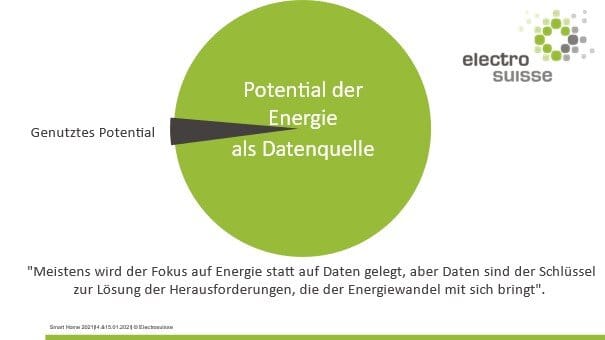
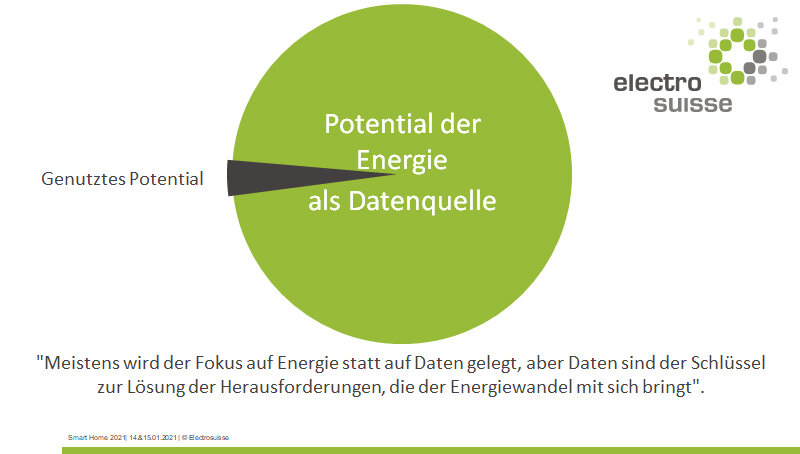
At CLEMAP, we believe that the potential for using energy as a data source has been largely untapped to date. This potential is available to a wide range of industries, including the real estate sector for property operators (smart homes and smart buildings). The current situation is as follows: an estimated 95% of energy measurement still takes place either not at all or in analog form, i.e., it is not carried out by intelligent, digital measuring devices. Non-digitized data is not only difficult to obtain, it also does not allow for in-depth analysis. Using machine learning in combination with intelligent algorithms, CLEMAP creates added value from energy data by performing detailed, scalable, and efficient analyses. These analyses enhance the data and can be used for a variety of purposes in addition to energy billing (efficiency improvements, warning messages, predictive maintenance).
An electric car consumes roughly the same amount of electricity per year as a small single-family home during the same period (approx. 7,000 kWh). While this is good news for the environment due to the CO2 emissions saved, it also poses a major challenge for power grids. The growing share of electric mobility is placing an enormous strain on the grids. By analyzing energy data and current consumption, it is possible to see the extent to which grid capacity is already being utilized. Dynamic load management, such as that offered by CLEMAP, ensures that at no point is more energy drawn than the fuse allows. The intelligent system analyzes how much of the available energy is already being consumed in the household and forwards the remaining energy to the charging stations. This prevents the central fuse of the smart home from blowing and ensures that the energy is used optimally. This optimization of charging station performance is just one of the new business opportunities that are emerging.
What does it take to make the future of energy more sustainable? With a view to the Energy Strategy 2050, the answer is "reduce energy consumption." For this to succeed, a change in society's energy consumption behavior is necessary. This change will not happen on its own, but must be actively initiated. One approach is to create transparency in one's own energy budget. Only when the population knows how electricity costs are calculated and what can be done to reduce them will it be possible to change society's energy consumption behavior. This transparency is provided by the CLEMAP One energy meter, which uses the free CLEMAP app to show exactly how costs (CHF) and consumption (kWh) are calculated. Thanks to intelligent analytics modules, the app breaks down consumption by device category and also provides information about the costs. For example, it shows how much electricity a washing machine uses and how much this energy costs. With CLEMAP's smart energy solutions, service providers and smart home operators can provide their end customers with the information they need to become aware of their own energy consumption, enabling them to make their personal contribution to achieving the Energy Strategy 2050.
Are you interested in our innovative energy solutions for smart homes with dynamic load management or consumption measurement and visualization? Contact us using the button below for a no-obligation consultation! We would be happy to put together a customized proposal for you and look forward to hearing about your exciting project.